
In recent years, the field of astrobiology has expanded the boundaries of understanding regarding the potential origins of life in the universe. With each new discovery, traditional theories about how life began on Earth are being re-evaluated. Scientists are now exploring possibilities that life could have originated in environments previously deemed inhospitable. These revelations are prompting a rethinking of life’s genesis, not only on Earth but across the cosmos.
New Astrobiology Insights and Their Impact on Origin Theories
The exploration of life beyond Earth has always been a tantalizing subject for scientists and the general public alike. Recent findings from space missions and laboratory simulations have presented significant challenges to conventional origin-of-life theories. The discovery of complex organic molecules on comets, moons, and distant planets suggests that the building blocks of life are more ubiquitous than previously thought. Such findings imply that life could potentially emerge in a variety of cosmic settings.
Astrobiologists are examining these components and their potential role in the formation of life. The detection of amino acids and other organic compounds in extraterrestrial environments suggests that the ingredients for life could exist beyond Earth, raising questions about whether life is a cosmic norm rather than an Earth-centric anomaly. These new insights are reshaping the understanding of life’s possibilities throughout the universe.
Further investigation into these discoveries is essential for developing a comprehensive picture of life’s origins. As research continues, it becomes increasingly apparent that traditional origin-of-life models need to accommodate a broader range of environmental conditions and biochemical pathways.
Evidence from Space Missions and Laboratory Simulations
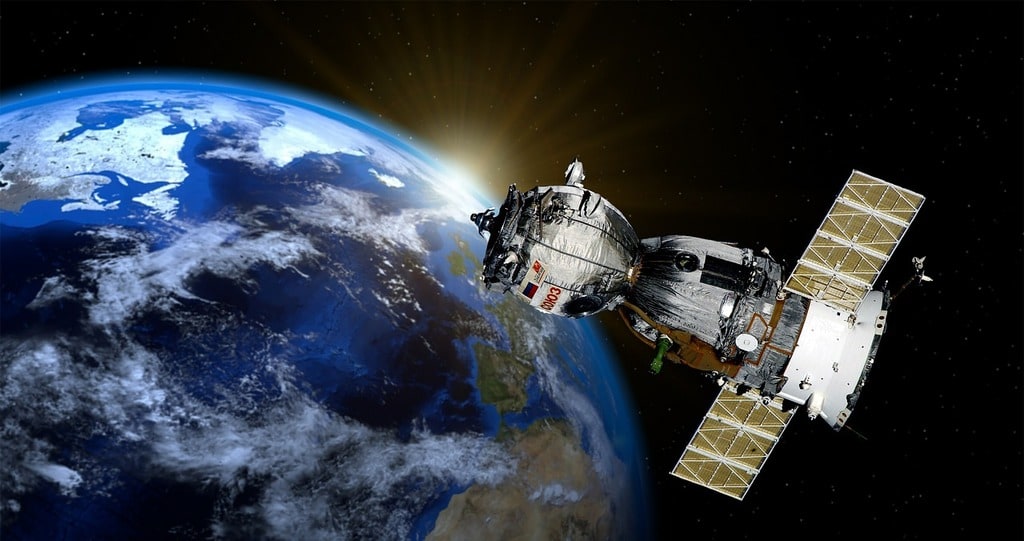
Space missions such as Rosetta, Cassini, and Mars rovers have provided unprecedented data that challenge existing hypotheses about life’s origins. For instance, the Rosetta mission’s detection of complex organic molecules on comet 67P/Churyumov-Gerasimenko suggests that comets could have delivered essential ingredients for life to Earth. This idea aligns with the panspermia hypothesis, which posits that life could have been seeded on Earth from elsewhere in the universe.
In parallel, laboratory simulations mimicking extraterrestrial conditions have also yielded fascinating results. Experiments that replicate the ice and radiation environments of space have shown that organic compounds can form under such conditions. This supports the notion that life could arise in environments far different from those on Earth, thereby broadening the parameters for life’s potential habitats.
These findings have sparked a surge of interest in studying extreme environments on Earth, such as hydrothermal vents and subglacial lakes, which could serve as analogs for extraterrestrial settings. The evidence gathered from these studies is invaluable for understanding how life might develop in similar conditions elsewhere in the universe.
Challenges to Traditional Origin-of-Life Models
Traditional theories of life’s origins often focus on a “primordial soup” scenario, where life emerged from a mixture of organic molecules in Earth’s early waters. However, recent astrobiological discoveries are prompting scientists to reconsider this model. The presence of life-sustaining molecules in various cosmic environments suggests alternative pathways for life’s emergence.
For instance, the discovery of extremophiles—organisms thriving in extreme conditions—on Earth hints at the possibility of life existing in similar harsh environments elsewhere. This adaptability of life challenges the notion that it can only exist in temperate, Earth-like conditions. Thus, astrobiology is encouraging a more inclusive view of where and how life might arise.
These revelations necessitate a re-evaluation of existing theories and models. Scientists are now tasked with developing new frameworks that account for the diverse conditions under which life might emerge. This involves integrating data from planetary science, chemistry, and biology to construct a holistic understanding of life’s origins.
Future Directions in Astrobiology Research
As the field of astrobiology continues to evolve, future research directions are becoming increasingly clear. The need to explore and understand the vast array of environments where life might exist is driving scientific endeavors. Upcoming missions to Europa, Enceladus, and Mars aim to delve deeper into these worlds, searching for signs of life and understanding their potential to harbor it.
Researchers are also focusing on refining laboratory simulations to better mimic extraterrestrial conditions. These experiments are crucial for testing hypotheses about how life could arise and evolve in varied environments. By continuing to bridge the gap between space exploration and laboratory research, scientists are poised to make groundbreaking discoveries about the nature and origin of life.
Ultimately, the future of astrobiology holds the promise of unveiling new aspects of life’s cosmic journey. As technology advances and knowledge expands, the quest to understand life’s beginnings will undoubtedly lead to profound insights about humanity’s place in the universe.
- Discovery of complex organic molecules on comets and moons.
- Laboratory simulations replicating extraterrestrial environments.
- Evidence of extremophiles suggesting life’s adaptability.
- Upcoming space missions targeting potential life-harboring environments.